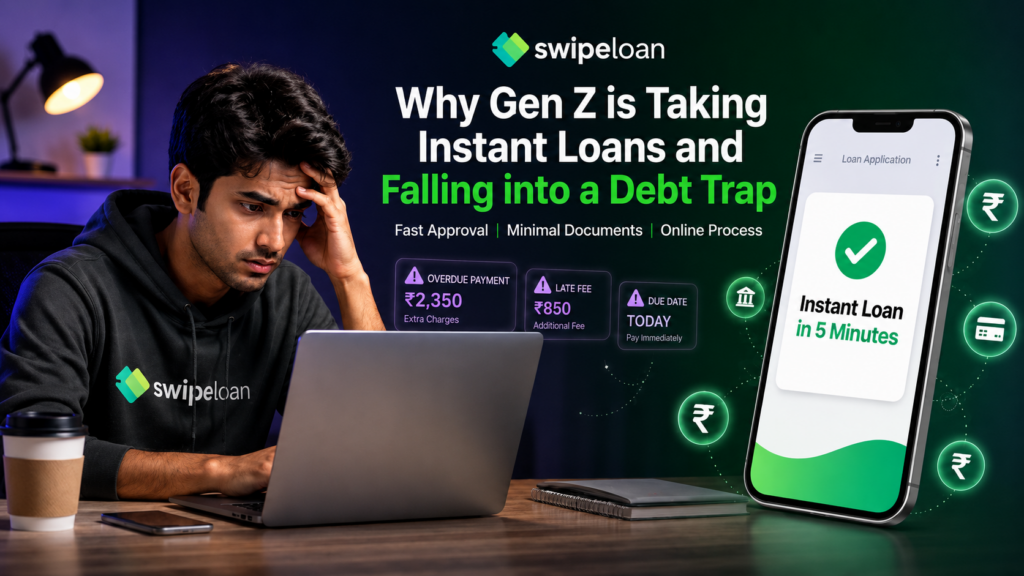
Why Gen Z Prefers Loan Apps & How to Avoid a Debt Trap
Today, due to the development of the digital world, acquiring money has become easier than ever.
As the popularity of online loan apps grows, the younger generation is exploring borrowing options
such as instant loans, instant loan approval, and quick digital loan processes.
These options are quick and convenient, which is why they appeal to many young borrowers.
However, when it comes to borrowing money, there is always a possibility of facing debt-related
problems that can become serious if loans are not managed responsibly.
Key Takeaways
- Gen Z is increasingly comfortable with digital financial services because they are quick and accessible.
- Instant loan applications can make borrowing convenient, but speed should not replace financial planning.
- High interest rates, fees, short repayment periods, and multiple loans can increase financial pressure.
- Missed repayments may negatively affect your credit profile and future borrowing opportunities.
- Borrow only what you need and always check the complete loan terms before accepting an offer.
Why Gen Z Prefers Loan Applications
1. Getting Immediate Results
Gen Z is accustomed to getting services quickly — whether it is food delivery, entertainment,
shopping, or financial services. Therefore, having access to an instant loan option can fit naturally
into a fast-paced lifestyle.
Quick digital applications can reduce the waiting time associated with traditional borrowing
processes and allow eligible applicants to receive decisions faster.
2. Availability From Almost Anywhere
An online loan app allows users to complete the application process digitally instead of visiting
a bank branch. This convenience is particularly attractive to young borrowers who are comfortable
managing services through their smartphones.
3. Faster Approval
Features such as instant loan approval and quick digital verification can eliminate some of the
waiting traditionally associated with loan applications.
However, faster processing does not mean automatic approval. The actual lending decision depends
on the eligibility criteria and assessment of the regulated lender.
4. Fewer Physical Documents
Digital lending processes can reduce the need for physical paperwork. Depending on the lender,
applicants may be asked to provide KYC information, income details, bank information, and other
documents electronically.
5. Influence of Media and Lifestyle
Social media can influence spending habits and lifestyle expectations. Some young consumers may
feel pressure to maintain a particular lifestyle or purchase trending products.
Using credit for lifestyle spending without considering repayment capacity can create financial
pressure later.
Debt Trap – How Does It Occur?
1. Excessive Interest Rates
Some online loan products may carry higher interest rates than traditional bank products.
Even a relatively small loan can become expensive when interest and other charges are added.
Smart Tip:
Compare the interest rate and total repayment amount before accepting any loan.
2. Unexpected Charges
Borrowers who focus only on quick approval may overlook processing fees, late payment charges,
foreclosure or prepayment terms, taxes, and other applicable costs.
Smart Tip:
Always check the complete cost of the loan before accepting an offer.
3. Short Repayment Duration
Some digital loans have relatively short repayment periods. Although a shorter tenure can help
close the loan sooner, it can also result in higher monthly instalments.
Borrowers with limited or irregular income may find it difficult to manage these repayments.
Smart Tip:
Select a repayment schedule that fits comfortably within your monthly budget.
4. Borrowing Loop
One of the most serious risks occurs when a borrower takes a new loan to repay an existing loan.
Repeating this cycle can increase total debt and make repayment increasingly difficult.
Smart Tip:
Avoid taking a new loan simply to repay an existing loan unless you have carefully assessed the
overall financial impact.
5. Credit Score Impact
Missed or delayed repayments can negatively affect your credit profile. A weaker credit history
may make it more difficult to obtain credit or may affect the terms offered by lenders in the future.
Smart Tip:
Keep track of every EMI and make repayments on time.
6. Financial and Mental Stress
Managing several repayments at the same time can create financial pressure. Constantly worrying
about upcoming due dates can also make money management more stressful.
Smart Tip:
Keep the number of active loans manageable and maintain a realistic repayment plan.
Clarification: Role of RBI and Digital Loan Platforms
It is important to understand how digital lending works in reality.
- Applications that advertise quick loan processing are not necessarily the lenders themselves.
- Some platforms operate as intermediaries or marketplaces.
- Such platforms may connect borrowers with regulated banks or NBFCs.
- The actual loan is provided and serviced by the regulated lender mentioned in the loan documentation.
Therefore, borrowers should identify the actual lender before accepting a loan and carefully review
the loan agreement and Key Fact Statement.
Why Generation Z Can Be More Susceptible to Debt Traps
1. Lack of Awareness
Young borrowers may not always understand interest rates, processing fees, penalties,
credit reporting, or repayment obligations before taking their first loan.
2. Impulsive Borrowing
Fast approvals can make borrowing feel effortless. This may encourage some users to make
financial decisions without first considering whether they genuinely need the loan.
3. Unsteady Income
Freelancers, gig workers, students, and young professionals may have income that changes from
month to month. A fixed EMI can therefore become difficult to manage during a low-income period.
4. Dependency on Digital Apps
Easy access to financial applications can make repeated borrowing convenient. However,
convenience should not become a reason to borrow regularly without a clear repayment strategy.
Ways to Prevent Yourself From Falling Into a Debt Trap
1. Borrow Only When Necessary
Do not take a quick loan simply because the application process is easy. Borrow when the money
is genuinely required and when you have a realistic plan to repay it.
2. Check the Terms Before Borrowing
Before accepting an instant loan, review the interest rate, processing fees, repayment schedule,
late payment charges, and other applicable costs.
3. Plan Your Repayment
Even when a loan is approved quickly, repayment should never be an afterthought.
Calculate the EMI and ensure that it fits comfortably within your monthly income.
4. Avoid Frequent Borrowing
Repeatedly using loan applications to cover regular expenses can lead to increasing debt.
Consider whether savings, budgeting, or another available source of funds can address the need first.
5. Build an Emergency Fund
Maintaining savings for unexpected expenses can reduce the need to depend on short-term credit
whenever an emergency occurs.
6. Use Reliable Lending Platforms
When considering digital borrowing, verify the identity of the actual lender and check whether
the lender is regulated as applicable. Do not rely solely on an app's marketing claims.
Looking for a Personal Loan?
Compare available loan options and review the terms carefully before accepting an offer.
Check Your Eligibility
Conclusion
With the emergence of quick digital loans, instant loan approval, and convenient online
application processes, borrowing has become easier for today's younger generation.
However, convenience also comes with responsibility. High interest rates, additional charges,
short repayment periods, repeated borrowing, and missed payments can turn an easy borrowing
experience into a difficult financial situation.
The best approach for Gen Z borrowers is to understand the complete cost of borrowing,
compare available options, borrow only what is required, and maintain a clear repayment plan.
Quick access to money can solve an immediate problem, but responsible financial planning helps
prevent those short-term solutions from becoming long-term debt.
Disclaimer:
SwipeLoan is a digital loan marketplace/platform and does not itself lend or disburse loans.
Loan approval, interest rates, fees, repayment terms, and disbursal are determined by the respective
lending partner. Borrowers should review the lender's Key Fact Statement, loan agreement, and
applicable terms before accepting any loan offer.